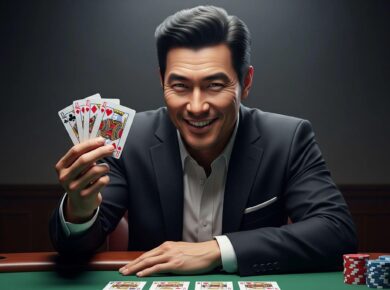
Let’s not beat around the bush — poker’s never had an easy path in the Asian casino landscape. While the West embraces Texas Hold’em like gospel, here in Asia, poker often feels like an outsider at the table. It’s not that the game lacks depth or intrigue. Quite the opposite — poker can be a masterclass in psychological warfare, risk management, and observational skill. But the factors that turn a game into a regional phenomenon go far beyond just game mechanics. Cultural preferences, betting psychology, regulatory nuances, and even social dynamics have combined to keep poker in the shadows of baccarat, sic bo, and slots in most Asian markets.
Cultural preferences tilt towards faster, luck-based games
Instant gratification over strategic depth
Many rookie observers make the critical mistake of assuming that gambling culture is universal. It absolutely isn’t. In most Asian countries, especially China, Vietnam, Thailand, and the Philippines, there’s a visible tilt towards games of pure chance, like baccarat or slots. The idea isn’t just to win — it’s to win fast. Games that deliver quick results with minimal mental burden match the dominant gambling ethos in this region. That’s precisely why baccarat reigns supreme in places like Macau and why slots dominate digital lobbies across leading Myanmar casinos like 22Bet. Poker, with its slower pace and cerebral decision-making, just doesn’t fit this momentum-focused mould. Countless times I’ve seen casual players in Manila bay casinos sit down at a poker table, only to get bored halfway through the first orbit. No razzle-dazzle, no crowd reaction — just patience and calculation. That doesn’t sell well here.
Social dynamics discourage competitive one-to-one competition
Saving face is more valuable than winning money
Now here’s where it gets subtler. In many Asian societies, face-saving and group harmony are more valued than one-upping your neighbour. Poker, by nature, is adversarial. You win by exploiting the weaknesses of others at the table. In high-context cultures like Japan, Korea, and large parts of Southeast Asia, that’s not an attractive trait. Even among friends, bluffing a buddy out of a fat pot can feel distasteful or disrespectful — and I’ve watched social groups dissolve over a bad beat. That’s very different from Western cultures, where poker nights are part of the friendly ribbing. Compare that to blackjack or slot machines, where the player essentially battles the house or the algorithm, not their peers. You lose together, you win together — and no one’s pride gets bruised along the way.
Legal and logistical hurdles slow poker’s progress
Regulations favour house-banked games
This isn’t just about taste — it’s also about red tape. House-banked games like baccarat and roulette are easier to regulate and tax because the odds are fixed and predictable. Poker, on the other hand, is player vs player. That changes everything from a legal standpoint. You need rake structures, fair dealing mechanics, trained personnel, and in many regions, a specific licence for player-pool interaction. Some countries barely tolerate sports betting — let alone want to mess with peer-to-peer gaming complexities. It’s no coincidence that even the more prominent digital platforms like Betway pour more resources into sports betting than they ever have into poker development in Asia. And running a live card room? Good luck getting permits, surveillance approvals, and the full-time staff it requires when the same floor space could host 10 more lucrative electronic baccarat terminals instead.
Marketing challenges and demographic mismatch
You can’t sell complexity to casual punters
Poker’s mystique in Western cinema — the staring eyes, the chip tricks, the cinematic bluffs — do not translate well to markets where the typical gambler is looking for small stakes, immediate returns, and a night of light entertainment. That results in a marketing mismatch. It’s tough to advertise a game that takes hours to learn and years to master in a market used to learning as they play — within minutes. And let me tell you, when I worked operations in a busy Macau pit, we once launched a short lived poker promo. The table sat empty for two weeks straight. Eventually, even the dealers started asking to be rotated out. People just weren’t biting. Compare that to one roulette wheel we set next to it, which saw constant action for 18 straight hours on a national holiday. The message couldn’t be clearer.
The human element is a double-edged sword
Some believe poker’s greatest advantage is its human complexity — reading tells, adapting to player dynamics, manipulating odds. In theory, yes. But from a house’s perspective, that’s also a disadvantage. Players bring variance, and variance is expensive. And on the online front? Maintaining fair P2P play means investing in anti-collusion systems, AI pattern detection, and payout auditing. That’s a sea of cost for relatively low yield in a market like Asia. So naturally, the push tilts toward stable, algorithm-driven offerings. Some of the newer online venues are finding creative ways to gamify poker — adding time-limited variants and simplified structures — but they face stiff competition from shiny slot games getting refreshed monthly and consistently offering jackpots that lure every casual eye. Just look at how often new table game variants show up compared to new poker formats. It ain’t even close.
Final thoughts — You can’t force a fit
Poker isn’t dying in Asia — but it’s constantly swimming upstream. Too strategic for casual players, too social for introverts, too complex for regulators, and too slow for operators chasing yield. That doesn’t mean it has no place. Go to niche poker clubs in Tokyo, or underground rinks in Hanoi, and you’ll find serious grinders who understand the beauty of the game. But as a wide-scale offering, poker's prospects remain dim unless it creatively reinvents itself or rides on the back of hybrid formats. In the end, the lesson is simple. Know your audience. Poker may be the king somewhere else, but here in Asia, it’s still a humble servant waiting for its day — if it ever comes at all.

 John Ashley








 Giuseppe Faraone